
Saint Catherine: a monastery, a landscape, a living tradition
Journal · 2026-10-10
Beyond the sunrise climb lies one of the Sinai’s most meaningful cultural visits. Here is how to give the monastery the time and respect it deserves.
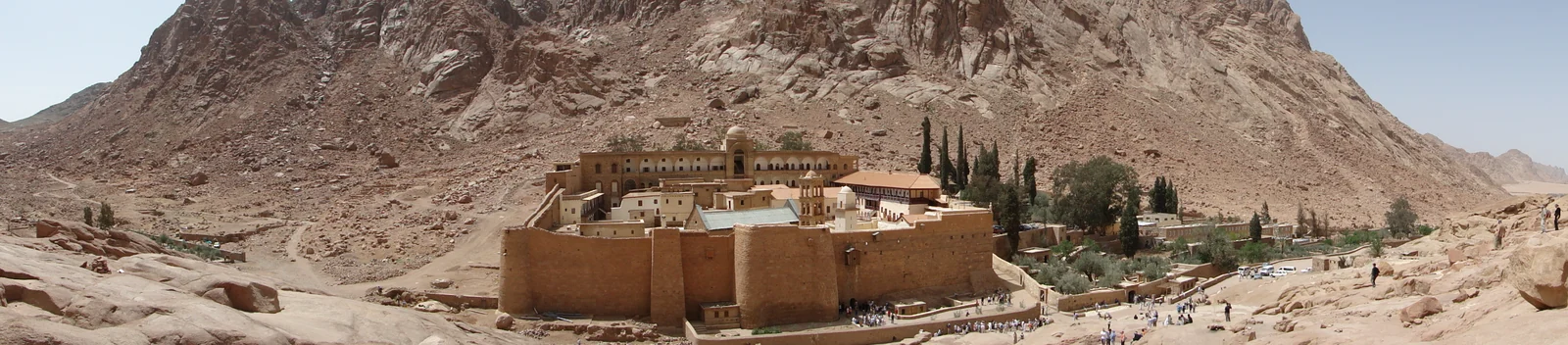
Reading the place
At the foot of the mountains, Saint Catherine brings architecture, religious traditions and landscape into the same view. The monastery dates to the sixth century and preserves a continuing monastic purpose. UNESCO recognises the significance of its Byzantine buildings, icons and manuscripts. The area is sacred in Christianity, Islam and Judaism. These connections help explain why it should be approached as a living religious setting, rather than a collection of photo stops.
Monastery visit or mountain ascent?
A daytime cultural visit and an overnight mountain walk are different experiences. The first puts the buildings and their setting at the centre; the second includes a sustained ascent in darkness and a descent after sunrise. Do not assume that every monastery tour includes the summit, or that a mountain package guarantees entry to every part of the monastery. Ask for the actual programme and the date’s access arrangements.
Practical preparations
Confirm pickup and return with your exact hotel, not just the name of its bay. Ask the operator what documents it needs, by when and through which secure channel. Dress respectfully and bring layers suited to a mountain environment: clothing chosen for a resort pool is not enough for a cold wait before sunrise. For the ascent, discuss the walking demands and your experience with the guide before committing.
Giving the visit enough space
Keep the following morning free if you choose the overnight route. During the visit, follow instructions about photography and access, leave room for worshippers and avoid treating private areas as public attractions. A guide can help connect individual details to the history of the place; ask questions rather than trying to see everything at once. Combine this article with the Sinai history guide to understand why mountain, monastery and route belong together.
A cultural day without the summit
You can make the monastery the focus of the trip without treating the mountain ascent as compulsory. Ask for a programme that explains how much time is allocated to the complex, what is accessible on the chosen day and whether the guide accompanies the visit or mainly the transfers. Allow time to look at the setting from outside before entering. Inside, focus on a small number of details explained well: the relationship between the buildings, religious use and the surviving artistic heritage. Access to a collection should be explicitly confirmed; a general monastery stop is not a promise of a library or museum visit.
Questions for a mountain guide
Before choosing the sunrise route, ask about walking time, the nature of the final climb, the pace of the group and what happens if a participant decides to stop. Clarify the meeting point after the descent and which equipment is supplied. Do not assume that a torch, warm layer or water is included because transport is included. For companions with different interests, ask whether separate cultural and walking programmes are possible; never improvise a split from the group on the trail. The useful comparison is the complete supervised itinerary, including the return, rather than a single photograph of sunrise.